)
)
)
INTERVIEW: Manish Misra, General Manager - Capital Projects, Chevron
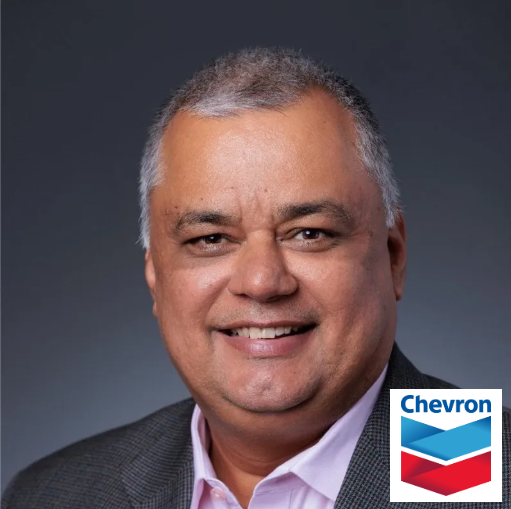
Q: What is Chevron’s strategy in the Power Generation space and what project work do you currently have in flight?
A: Chevron has had a long history of designing, building and operating power generation facilities to support our own energy and industrial operations worldwide. Across our global portfolio, we have operated large-scale power systems that meet grid-level reliability standards in places without access to external transmission networks.
This, combined with our significant U.S. natural gas position, positions us to help power the growth of AI through behind-the-meter power. Our strategy is to build off-grid energy parks powered by U.S. natural gas to supply electricity directly to hyperscale data centers.
This will help us meet rapidly rising reliable electricity demand from AI at the pace at which they need but also in a way that helps us avoid placing additional cost pressures on residential or commercial. And we also bypass the grid congestion and interconnection constraints that we currently have, especially given our end customers' need for speed and scale at the same time. we are working with multiple hyperscalers and projects where we can deliver at pace while also maintaining very high standards of safety and operability and reliability in long-term performance.
We already have secured multiple large gas turbines from GE Vernova that are required to generate this power. We have a site in development in West Texas and are deep into engineering and permitting. This project will deliver multiple gigawatts of gas-fired power generation – so exciting times for Chevron in this space.
Q: What are some current industry challenges in Power Generation?
A: Rapid growth in power demand is the first challenge, which continues to compress development timelines, while managing significantly longer equipment lead times for large turbines and even ancillary equipment and construction resources.
Also, behind-the-meter facilities present unique challenges as functions traditionally provided by utilities now need to be managed by the owner – for instance: real-time power balancing, frequency and voltage control, and system stability. There are also skilled labor shortages in certain trades, like electrical. All these challenges require close partnership between owners, EPC contractors, and equipment providers to navigate.
Q: How does partnership shape how you look at potential future opportunities?
A: If you look at the level of complexity and the challenges that we’ve just talked about, owners, OEMs, suppliers and EPC companies need to think beyond the conventional ways of working and address challenges in an integrated manner to provide solutions that are competitive, predictable and reliable for our customers.
Also, the way we define the performance ownership and smart allocation of risks is equally important. As an example, given the labor constraints we talked about, the wages that it takes to attract a quality labor force is pretty dynamic. We all have to share in that risk, because it's truly beyond any one company's control. So that is something that should be shared.
But, on the other hand, elements like how efficient the labor is, how productive the labor is – that falls under the expertise of the EPC contractors and would be best managed by them.
Q: Do you have any closing perspectives to share on behalf of Chevron?
A: I'll end the way I started. We have a lot of experience as a company in operating the critical power infrastructure across geographies, and as the demand growth continues, as the complexity of these investments increases because of either the behind-the-meter or some of the market dynamics we’ve discussed, it would require a very disciplined execution and some pragmatic design choices and robust supply chains to withstand these ups and downs. And lastly - performance-driven partnerships –which we do pretty well at Chevron.
Q: Why are you looking forward to speaking at the Power Generation conference?
A: I think given the speed and scale which we've talked about here, we all need to learn from each other. No one company has all the answers, for sure not the right answers. And I appreciate the platform the Power Generation conference as an example is providing for the industry partners to come together.
You have a very impressive list of speakers and attendees there, and I'm looking forward to learning from that group.
)
)
)
)
)