)
)
)
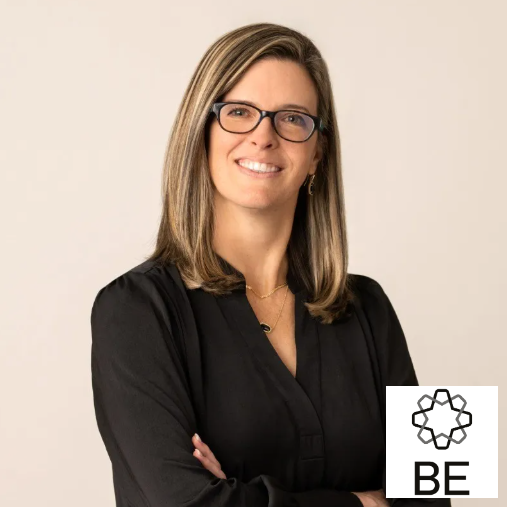
INTERVIEW: Alice Yake (Jackson), VP - Grids, Breakthrough Energy
Regulatory challenges: How can we resolve the persistent jurisdictional tension between federal mandates for regional transmission planning and state-level authority over siting and cost allocation to prevent a fragmented, inefficient grid?
A: I think we have to go to the root of the conflict, and to me, the root of the conflict is a lack of alignment or the lack of trust in the need for the solution that's being discussed. The question that always comes back to us is, who's in charge of the modelling? Who's in charge of saying, “This is the solution”? I've been on several sides of this discussion, whether it was as a large industrial customer looking at the transmission expansion in the Southwest Power Pool, or running regulatory teams inside of utilities that were in states that were both inside of RTOs and outside of RTOs. Am I going to get cost-allocated for a transmission line that's being built in Kansas, but doesn't help any of my customers' needs in Texas? Lots of different pieces of the puzzle. So, there's this trust piece.
I'm a fundamental believer that the lack of trust can be overcome by having common modelling that's really transparent, so that people are solving the problem together. Now, the question you asked focuses specifically on transmission, and one of the things as an industrial customer that we would always ask questions of is whether transmission is the only solution.
Maybe placing a generation asset at a key point actually is less expensive than building a transmission line. So, the modelling can also bring in the aspects of “Let's not just look at one piece of the puzzle as being the solution”. We need to be looking at the multitude of technologies that are available to solve the problem that we're looking at. So, I do think that there needs to be a return to the trust, and then also alignment around the models and the tools, and a lot of transparency around those in order to overcome some of this problem.
AI demand: As the 24/7 power requirements of AI data centers outpace traditional transmission build-out, what strategy best ensures that large-scale "behind-the-meter" co-location doesn't leave the public grid underfunded or less reliable for residential ratepayers?
A: I think this is a loaded question that we could spend hours discussing and getting into. But first off, it's not just the transmission infrastructure that has to be paid attention to; it is also the generation assets. When we talk about behind-the-meter co-location for generation, I actually think that that's a benefit to the grid. And the reason is that, especially in grids like ERCOT where you can arbitrage the prices in real time, or if you're operating in a regional transmission organization, you have the opportunity to export from that location in the event that the price for energy is lower than what the grid's energy is, and the transmission is available.
So, I do think that there is a solution that has to be looked at as far as building, whether it's all of the generation that that data center needs or a subset of the generation that that center needs, behind the meter, in order to mitigate some of the costs of the transmission infrastructure. It's not that there's just one solution; it depends on where you're building the data center and what is needed in that area. But I do think that there are a lot of policies across the US, particularly on making sure that the entity that's causing the needed investment in the transmission system bears the cost. And, I think those are appropriate. We've been doing it in the oil and gas fields for a long time for utilities that have heavy oil and gas presence in their areas.
Oil and gas production requires a lot of infrastructure in order to operate their equipment, and there's the risk of production not being as long as the life of the installed infrastructure. The way this issue has been overcome is that the customer has to pay for the infrastructure up front, or a portion of the infrastructure up front. There are contractual ways that you can both meet the needs of the new customer and reduce the risk for the rest of the customers.
If you're talking about the physics of the system, I do think we're going to need some behind-the-meter generation in order to help at those data centers, and that could bring down the cost of the transmission. Once again, it goes back to planning and looking at what you need, where you need it, and making sure that you are reducing the risk to the remaining customers on the system.
Behind-the-Meter: What specific market or regulatory "unlock" is required to transition behind-the-meter distributed energy resources from being managed as passive load-reducers to being fully integrated, dispatchable participants in wholesale energy markets?
A: Technology, software. Software is needed. My former job prior to this one was as Chief Planning Officer at Xcel Energy. And a lot of people would say, “You have hundreds of megawatts of behind-the-meter installed generation. Why aren't you using it?” Unfortunately, when it gets back to the people who are operating the system, they can't see it. And if they can't see it, it doesn't exist.
Being able to have the software plumbing everything, where you can see exactly where these opportunities are, whether it's a battery storage that you can charge or discharge, or it's a rooftop solar project that you can flow back onto the system, or you can have those coupled together and decide if you want it to go on to the grid or if you want it to go into the battery for usage later. Those are all things you have to have visibility into, and visibility has to be given to the operator. And in most of these cases, the operator is the utility. If they can't see it, they can't count on it. They can't take credit for it. If you really get into the weeds of how all of this works, it ultimately has to get from that distribution network, through the distribution operation center, through the transmission operation center, back to the energy management system, which is where dispatch happens for the generation aspects.
You have to have that eye in the sky that's seeing all of it that's operating, because there are requirements. The RTOs or FERC or NERC all require you to carry certain reserves on the system, which is back-up in order to be able to meet the needs of customers. Because there's not a single customer that calls a utility and says, “Hang on a second, I'm about to turn the light switch on or the manufacturing line.” You have to have all these things in place to meet the electric needs of customers instantaneously. You have to carry it, and if you cannot see it and you cannot count on it, it doesn't exist. So, we need software that's going to get it all the way back with adequate communications and then the protocol to be able to activate it when you need it on the system to maintain reliability and resource adequacy. So, software.
Balancing loads: With the loss of physical inertia from retiring thermal plants, what is the most critical hurdle – technical or economic – to deploying grid-forming inverter technology at the scale necessary to maintain frequency stability in a high-renewables environment?
A: This question limits it to an “or” between technical and economic and I would actually argue it might be something else. Understanding how the systems work would be the technical side. Having that in the modelling appropriately, so that you can select this as a technology to be deployed, is an even bigger hurdle that has to be overcome. So, you can identify in a laboratory how this is going to work, but if the models don't adequately reflect it, it's as if it doesn't exist again.
So, it’s the same kind of theory as what we were just talking about – if you can't see it to count on it, if you can't model it to select it, it doesn't exist. The modelling component we have to figure out is how we represent it in the tools that are selecting the infrastructure and the technologies to be deployed.
The second piece of this one is supply chain. This technology is in direct conflict, or in a head-on collision, with a lot of other semiconductor dependent products, and we all know from the news around the world the shortages that we are having and the constraints and the costs.
Supply chain is a huge component of this, from the semiconductor piece and the materials that have to go into building out the grid-following and grid-forming inverters, but also the people. Grid-forming inverters are a lot harder to install. They take a much higher level of sophistication for the people who are doing the installation, and those people are in short supply. So, from a supply chain, from a workforce perspective, or supply chain from a materials perspective, I honestly think that's a bigger hurdle that we need to overcome than probably the technical or the economic components.
Interconnection Reform: Moving beyond "first-ready, first-served" queue processing, what radical structural shifts are necessary to transition the grid from a reactive interconnection model to a "proactive planning" model where capacity is built ahead of specific project requests?
A: We need alignment. The question assumes that the model that is desired is one in which system capacity is waiting for load. This is not the position I have heard advocated for by customer advocates or incentivised by regulators. It’s quite the opposite.
In order to move the interconnection reform and have excess capacity available on transmission infrastructure, that means customers have to pay for it before you have customers to use it. In this time of data center growth, we hear, “how are we going to protect customers from the infrastructure that needs to be added?” but then, on the other hand, saying, “we now want a grid that anybody can connect to when they want to”, those are in direct conflict with each other.
Somebody has to invest in the infrastructure ahead of time, and then customers have to pay for the infrastructure as soon as it's installed. The philosophy has been for the past 30 years in this country that you rarely do the Field of Dreams, where you build it, and they will come, you actually look at exactly what's coming and try and build exactly – or as close as you can – to that particular need. And, there are years of debate as to how big to build things prior to constitution. This is also recognising affordability and what you build for. Thus, alignment is what is needed around proactive planning.
You have to “pull out your crystal ball, where do you think people are going to build infrastructure? How long is it going to take for them to use that system?” And by the way, somebody still has to pay for that capital investment and the maintenance and everything else in between. So that's where it really has to come back to – it’s this mind shift of “We're willing to pay for this in order to alleviate the problems on the other side”. Without alignment, we will continue to have discord.
Fundamentally, I believe an element of achieving this alignment is faster, repeatable, and transparent modelling.
EPC Show: Finally, why are you excited to speak at the Power Generation event in Houston this June? And why is this event important to you?
A: Because of all of the things that we just talked about. It is a pivotal time in the industry and being together in a space right now, like at Power Generation, to be having these conversations, looking at things from different angles, trying to figure out how we get to alignment and build trust so that we can move faster through the process is important. Clearly there is load growth, there is a system that is aged, that needs to be replaced, and so it's a prime time to be having the discussions.
)
)
)
)
)