)
)
)
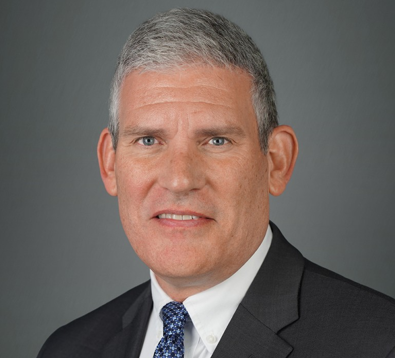
INTERVIEW: Thomas Nixon, Senior Vice President, Markets & Strategy, Kiewit
1. The U.S. is talking about a nuclear renaissance, but what will it actually take to build new reactors at scale again?
A nuclear renaissance only becomes real when we stop thinking about reactors as one-off megaprojects and start treating them as products that are deployed repeatedly.
Historically, every large nuclear plant in the U.S. has effectively been its own custom project; unique design nuances, evolving engineering, fragmented supply chains, and execution models that reset every time. That model does not scale. It creates variability, and variability is the enemy of cost and schedule certainty.
If we’re serious about building at scale, the paradigm has to shift toward productization. That means standardized designs that are largely fixed before construction begins, a supply chain that is aligned to produce repeatable components, and an execution model that is built around consistency from site to site.
From a construction standpoint, that changes how we think about everything. You move from stick-built, field-driven execution to a model that emphasizes manufacturing, modularization, and repeatable installation sequences. You invest upfront in design for constructability and design for manufacturing, not just design for licensing.
It also requires a programmatic mindset. Instead of asking “how do we deliver this plant,” the question becomes “how do we deliver the next 10 plants better than the first?” That shift drives different decisions around procurement, workforce development, digital tools, and risk allocation.
Ultimately, scale comes from repetition and learning curves. If we can align the industry around a product-based approach, with disciplined designs and consistent execution, then building multiple reactors becomes a matter of industrialization, not reinvention.
2. As one of the few EPC contractors with deep nuclear construction experience, how is Kiewit preparing for the next wave of reactor builds?
Kiewit’s focus is on readiness where it matters most: people, processes, and execution capability.
We’re engaging earlier with developers and technology providers to help shape projects before they reach the field, especially around constructability, modularization strategies, and how designs translate into executable plans. That early alignment is critical to reducing downstream risk.
We’re also investing in tools and processes that improve predictability; advanced work packaging, digital planning, and tighter integration between engineering, procurement, fabrication, and construction. In nuclear, success is less about any single function and more about how well those pieces work together.
Just as important is continuity - building experienced teams, strengthening supplier relationships, and carrying lessons learned forward. The next wave of projects will reward organizations that can execute consistently, not just deliver once.
3. What lessons from recent nuclear construction projects should developers and utilities be applying as they plan the next generation of plants?
One of the biggest lessons is the importance of starting with a high level of engineering maturity. Projects that move into construction with evolving designs introduce risk that compounds quickly in the field.
Developers and utilities should also take a hard look at how well design, supply chain, and construction strategies are aligned. Modularization, for example, only delivers value when it’s fully integrated into the design and supported by qualified suppliers and realistic installation plans.
Another key takeaway is the need for disciplined governance. Clear decision-making, controlled change management, and aligned incentives across stakeholders are essential. In nuclear, small misalignments early can turn into major impacts later.
Finally, there’s a recognition that early projects carry a different risk profile. Setting realistic expectations and allowing room for learning ultimately leads to better outcomes as experience builds across subsequent projects.
4. How ready is the nuclear supply chain today to support multiple new reactor builds across North America?
The supply chain is moving in the right direction, but a true product-based deployment model will require a different level of alignment and commitment.
In a traditional project environment, suppliers react to individual project demand. In a product environment, they invest in capability, capacity, and process consistency because they see a sustained pipeline.
That’s a critical distinction. Productization depends on suppliers being able to produce repeatable, nuclear-qualified components at scale, with consistent quality and predictable throughput. That often means investments in facilities, tooling, workforce training, and certification programs.
The opportunity here is that a stable build program can unlock those investments. But it requires visibility and coordination across multiple projects, not just isolated procurement strategies.
So the supply chain is not starting from scratch, but to fully support multiple concurrent builds, it needs to evolve alongside this shift toward repeatability and industrialization.
5. From a construction and project delivery standpoint, how different will building SMRs be compared with traditional large nuclear projects?
SMRs are where the product-based model becomes more tangible, but they still require disciplined execution to realize that potential.
In principle, SMRs are designed to be manufactured, not just constructed. That aligns directly with a product-oriented approach; standardized units, factory fabrication, and repeatable installation. If executed well, that should reduce field complexity and improve schedule certainty.
But the key is “if executed well.” The benefits of SMRs depend on how effectively the industry integrates design, manufacturing, logistics, and construction. If those pieces are not aligned, you risk introducing a different kind of complexity rather than eliminating it.
From a construction perspective, the role shifts. The field becomes more about assembly and integration, while a larger portion of the value is created upstream in fabrication. That makes early planning, supply chain coordination, and logistics even more critical.
So SMRs can enable a product model, but they don’t guarantee it. The execution strategy still determines whether that promise is realized.
6. What role do engineering and construction events like the Nuclear Engineering & Construction Conference at EPC Show play in helping the industry solve project delivery challenges?
These events are important because the shift from project-based to product-based execution is not something any one organization can solve alone.
It requires alignment across the entire ecosystem; developers, engineers, constructors, suppliers, and regulators. Forums like this create space for those groups to compare notes on what it actually takes to deliver repeatable projects: how to standardize designs, how to structure contracts, how to qualify suppliers at scale, and how to carry lessons learned forward.
They also help ground the conversation. It’s easy to talk about innovation at a high level, but the real work is in execution; how modules are fabricated, how schedules are built, how risks are managed. Those are the discussions that ultimately determine whether a product-based approach succeeds.
If the industry is serious about scaling nuclear, then these kinds of conversations need to happen early and often, with a focus on practical solutions, not just concepts.
)
)
)
)
)