)
)
)
INTERVIEW: John Irvine, Global Operations Centre of Expertise, Senior Project Manager, Dow Chemical
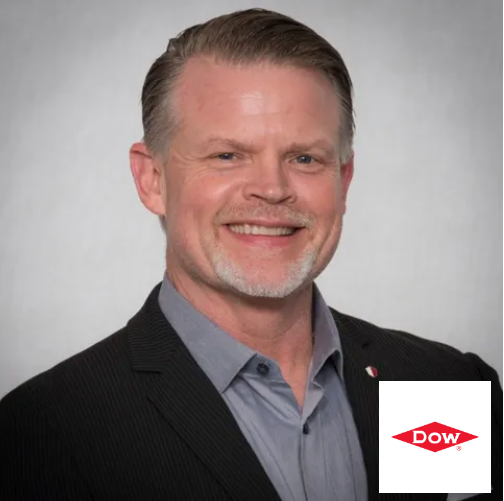
Q: We often talk about project delivery and operations separately. Where do you see the biggest disconnect between capital execution and long-term asset performance?
A: I think probably the biggest disconnect happens at the point of integrations in handover – when commissioning, return to operations, all of the quality assurance and quality control happens.
I think that's also when the biggest disconnect opportunity is. Projects optimize for cost, schedule – that's their main focus – while operations inherit the reliability, maintenance, and resourcing from a staffing perspective. And then, capital project execution often ends before the assets are really, truly operations-ready.
I think some of the common failures are that the design decisions are optimized for capital execution, not lifecycle costs, so they’re not necessarily as inclusive or proactively considering preventive maintenance, ongoing maintenance, accessibility, spares, energy use and things like that that the organization will live with long term.
Also, I feel that operations gets invited late to the party a lot of times, or they're minimally involved. It's usually limited to the part of the process where they're brought in as an operating, disciplined part of the process, like for quality assurance, quality control, commissioning, RTO, the acceptance testing – whether it's shop acceptance testing or field assessment testing – instead of being brought in early on in the process to have a seat at the table for influencing the design. Those are my thoughts on the biggest disconnect.
Q: If operators are being asked to do more with fewer resources, what does “operational excellence” actually mean in 2026?
A: I think it means doing less work and not asking people to work harder. And what I mean by that is it's about changing the way that we think about how we get our work done and reframing for reliability by design and trusting in and having trusted digital data so we can optimize, both in work process and execution.
It'll increase decision-making, timing and also and help to empower the workforce resources – as far as our staff and operations go – to make those real-time decisions. I think that's probably what it means in 2026 right now.
Q: The EPC Show brings together operators, EPCs and technology leaders under one roof. What excites you most about shaping this conversation live with peers this year?
A: It creates a space where operators and technology leaders can get together and have honest, transparent, cross-functional conversations about firsthand experiences with trade-offs, handover quality, long-term asset value and not just project delivery.
It’s having those real conversations about trade-offs like schedule versus operability, automation versus workforce readiness and then helping to get alignment on what “good” actually looks like at handover, not just contractually with your GM, but operationally with your production operations partners. And to me, hearing from industry peers, what's actually working for them in the field – that's priceless.
Because of that, many times, it does not equal what looks good in a slide deck. So theoretically, things look great a lot of times, and in reality, it's a completely different story. I'm really looking forward to some more of that this year.
Q: What else are you most looking forward to at this year's EPC Show?
A: For me, I always actually love the case studies. The networking is probably my number one, getting to have those conversations.
But when I go and listen to a session, the ones that cover practical, real-world case studies always pique my interest. Because they get into those real-world lessons that have been learned and then you can actually have conversations afterward, during networking opportunities, to try to move beyond what conceptually could be an ambitious idea to: “What is the measurable operational outcome for you?” To ideas that could be applied in the short term, right away, as soon as I get back to the office Monday morning, not six months down the road.
)
)
)
)
)