)
)
)
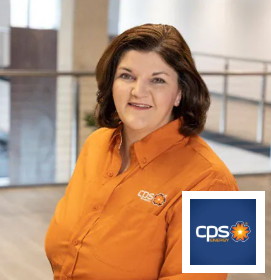
INTERVIEW: Elaina Ball, Chief Strategy Officer, CPS Energy
Q: How is CPS Energy managing booming power demand?
A: Similar to the trends you're seeing domestically in the United States, Texas is certainly surfacing as a bright spot for large load users.
We're seeing an influx of new demand from all types of commercial and industrial customers, as well as residential growth. Our CPS Energy service territory is no different. We are active across the entire spectrum of our service delivery model to plan for, prepare for, and enable the growth we're seeing. That comes from everything – from reconfiguring and hardening our natural gas system, to expanding both our existing footprint of transmission, as well as being one of the utilities that are establishing Texas' first ultra-high voltage transmission network.
So, we'll be constructing hundreds of miles of new transmission to support power flows throughout the state. On the power generation side, we've been executing a multi-year plan that calls for new resources and contracted power across all generation types.
One thing that has been a bit different for us over the last couple of years is that we have acquired some power-generating facilities through opportunistic mergers and acquisitions. This allowed us to bring some additional gas power generation into our portfolio ahead of plan, for a fraction of a new build. That’s a high-level view of some of the things we're doing to help plan for and be ready for the demand that we're going to see over the next several years.
Q: Grid resilience is a key challenge. How are you positioning your infrastructure to support "behind-the-meter" natural gas generation for data center operators who cannot afford to wait for utility-scale grid upgrades?
A: We are a combined natural gas and electric utility, so we've been servicing customers who have needed resilient products for decades.
We're certainly seeing greater interest in behind-the-meter generation – not only natural gas, but also other types of resources. And you're highlighting here relative to speed, but there's also a reliability component and making sure that in times of extreme events – weather, grid, etc. – these customers have behind-the-meter solutions to help them ride through those events.
We've seen all kinds of technologies and are working with customers to support these behind-the-meter solutions. Because, quite honestly, we see it as an obvious benefit to the customer and as a way to provide demand flexibility for us. We see demand response and demand flexibility as one of the more efficient ways to manage the growth the grid is seeing right now.
Q: Data center tenants require 24/7 uptime but are often bound by strict net-zero mandates. How are you helping these clients reconcile the need for reliable baseload power with their long-term carbon reduction commitments?
A: As we think about decarbonization, as part of our long-range strategy, we are on a path of decarbonization of our resources across the board over the next several decades.
We have objectives to reduce our carbon intensity by 41% of our baseline year by the year 2030 and then subsequently 71% by 2040, with an aspirational goal of net zero by 2050. Certainly, as we work to put in place not only zero-carbon resources but also low-carbon resources and demand flexibility and storage, all of our customers are going to benefit from lessening the carbon intensity of our fleet.
Q: San Antonio is seeing a flurry of demand from data centers and advanced manufacturing. How is the strategy team refining its forecasting to ensure we don't over-build (raising rates unnecessarily) or under-build (risking reliability)?
A: This is a really important question that is not just unique to our utility but is an ERCOT-wide discussion that's occurring. ERCOT is the regional transmission organization and the ISO for about 90% of the state, and we are seeing refinements and adjustments to forecasting tools, methodologies, and expectations. Right now, ERCOT has multiples of the demand, peak demand in the queue, and San Antonio is no different.
We're utilizing somewhat of a look-back, traditional, stochastic kind of modelling, while we look forward to understanding the large loads in our queue and within the ERCOT queue. From here, we’re baking in a level of certainty around resources that have all the elements – site, control, collateral, etc – studies completed in a high-probability scenario through speculative loads or inquiry loads that are just beginning the process, so kind of risky. We’re thinking about the likelihood of when resources are going to be needed, and these loads are going to interconnect.
Relative to raising rates unnecessarily, we do go through a robust cost-of-service study on a periodic basis, and we've had large loads for many years, as have most utilities. For CPS Energy, it's about ensuring that with these larger loads and growth coming to the system, we're set up to study pre-construction, construction, and operational cost structure to ensure these customers are paying for their fair share of the system, thereby not passing on or burdening other customers with the growth.
Q: Finally, you are a speaker at the EPC Show. Why are you excited to participate in this event, and why is it important to you?
A: The things we’ve just talked about highlight the significant amount of change our industry is experiencing – growth, uncertainty, and the need to plan and construct resources to support this environment.
For me, I'm most excited to learn from peers, learn from developers, and engage on practical solutions to all the challenges we're facing as an industry.
)
)
)
)
)