)
)
)
EXECUTIVE INTERVIEW: Heather Remley, President and CEO, BASF Corporation
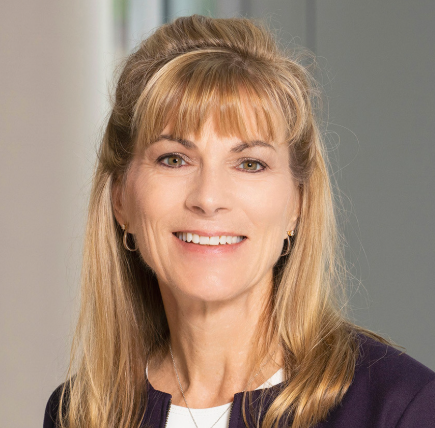
BASF CORPORATION CEO & GLOBAL ENGINEERING PERSPECTIVE
Q: Heather, you have been in your role as President and CEO of BASF Corporation for a year now. Prior to this, you led Global Engineering Services from Germany.
How has your global experience influenced how you are positioning BASF Corporation in the US market? What do you see as the biggest opportunity – and the biggest constraint – for growth over the next few years?
A: Leading global engineering gave me great insight into capital planning, execution, capital efficiency, how we integrate energy and sustainability technologies into our plant designs and – definitely – the value of partnerships. The US is not just a market for us.
We've been in the US for over 150 years so it's a market that we have a strong past in, but also a market that we want to continue to grow in, in the future. And the US itself – it has strong industrial backbone, it has strong infrastructure.
That enables world class manufacturing and efficient movement of materials and goods. We definitely have advantaged feedstocks compared to other parts of the world that enable us to be competitive on a manufacturing scale.
We have strong talent, and on top of that, we have a business-friendly climate in the administration that is very supportive of businesses to continue to invest. I think all of those opportunities are very powerful for the United States.
But while we have all of those that contribute to attractive investment, we also have rising investment costs, we have rising labor, we have the policy uncertainties driven by tariffs and certain things like that. And then, from a chemical industry perspective, we're battling a saturated market with excess capacity, soft global demand and macroeconomic volatility.
So, all of those are posing challenges for BASF and other companies, but we continue to invest for the long term. We've invested $10bn in the last decade and going forward, for the next four years, we will invest 24% of our four-year capital budget in the US as well, targeted for the North America expansion.
We continue to reinvest in existing plants as well, boosting efficiency, performance and reliability. But we're very, very proud of our largest capacity addition, which is our key value chain with MDI, where we are coming up on completing a $1bn expansion at our Geismar facility.
That's our largest standalone investment to date in the US. So, that's also where we're not just incrementally investing in existing plants, we're also building new capacity.
DECARBONIZING THE PETROCHEMICAL CORE
Q: As BASF directs capital toward sustainability and 'green' product streams, what do you see as the biggest engineering challenge in retrofitting legacy facilities versus building new, carbon-neutral 'Verbund' sites from the ground up?
A: I think one thing that we're very proud of is that we don't wait for change at BASF, we continue to create it. And for us, sustainability is a key differentiator, a key competitive advantage. It's also part of our responsibility and a societal responsibility.
We're very public about our desire, our ambition to be the preferred chemical company that enables our customers' green transformation. And we're making great strides towards net zero by 2050 by converting our plants to green energy, piloting new sustainability technologies and working with our suppliers to also tackle Scope 3.1 emissions.
We've made great progress in the development and deployment of renewable and circular feedstock solutions, and we're also expanding our sustainable product portfolio and helping to drive measurable reductions in product carbon footprints across our value chains.
But with that said, I think our biggest engineering challenges stem from converting existing manufacturing plants and how you technically and affordably integrate new sustainable technologies into the existing facilities. So, when you get to retrofitting, it's really an integration challenge. You're modernizing assets that maybe weren't historically designed for these technologies – electrification, hydrogen, circular feedstocks, carbon capture.
Then, when you get into the existing facilities, you've got space constraints, heat integration constraints, brownfield tie-ins and legacy control systems, and all of those add tremendous complexity from a design and an execution standpoint. So your success then comes into play with a strong design integration – precise sequencing and interface management and how you try to minimize disruption to the operating facility while you're lowering the carbon footprint. And that's all while you're trying to maintain world-class safety and high utilization of operating plants. That's really where we're challenged from an industry perspective.
When you get to the greenfield plants, there you're allowed to design in and embed electrification, digital optimization and circularity from day one. And your engineering complexity shifts a little bit more to what we call a system-level design, where you've got to integrate energy, feedstock and utilities all at the same time, while to some extent you may be waiting on developing external technologies such as renewable power, hydrogen supply and CO2 capture networks. And then you also always want to keep a lens towards how you're building structural flexibility into long-life assets, because our assets run for 50-100 years easily. And how you do that in the face of evolving market regulatory technology landscapes is also a challenge from a greenfield perspective.
So, whether you're retrofitting existing facilities or building new ones, decarbonization really requires portfolio thinking, not single-technology bets. And decision-making with a certain degree of uncertainty now becomes an engineering core competency, especially when you have competing priorities of cost, infrastructure readiness, policies and affordability.
So, with the technical and economic challenges that are facing the industry and society, at BASF, we are happy to partner with our suppliers and other technology peers in the pursuit of sustainable wins, and I think that those are where we can leverage great degrees of success as well.
THE STRATEGIC IMPORTANCE OF INDUSTRIAL GASES AND INFRASTRUCTURE
Q: In the context of new energy transitions – like hydrogen or carbon capture – how critical is the partnership between chemical owners and infrastructure providers in de-risking these landmark projects?
A: It's very critical. Whether you're talking the role of an owner or an EPC, you have to ensure that both paths – hydrogen and carbon capture – deliver not just lower carbon but long-term competitiveness and resilience for the chemical industry. And that's where the partnerships are critical to developing the new technologies and de-risking them.
We have several partnerships that we can reference. Currently, we're collaborating with ExxonMobil on methane pyrolysis to jointly develop technology towards scale-up and future commercialization. And that's where we're combining decades of industry experience, deep technical knowledge and a shared commitment to innovation.
We've combined BASF's innovation streak with ExxonMobil's experience in large-scale energy projects. And we plan to construct and operate a demonstration plant capable of producing up to 2,000 tonnes of low-carbon emission hydrogen and 6,000 tonnes of solid carbon product annually.
This facility will serve as a critical step towards commercial readiness to help validate the technology at scale for efficient, cost-competitive, low-emission hydrogen. So that's a wonderful partnership where we're currently leveraging both our years of R&D experience and their energy project experience in deploying a cost-competitive, low-emission hydrogen option.
Then we have our collaboration that we did with SABIC and Linde, where for three years we worked together to develop, engineer and build the world's first demonstration plant for a large-scale electrically heated steam cracking furnaces at our Ludwigshafen plant. These electrically heated steam furnaces were commissioned in April '24, but they are certainly marking a major step towards commercial readiness.
They're completely powered by renewable energy, they use 6 megawatts of renewable energy and they're enabling us to test materials and processes at industrial scale. It has the potential, this technology, to cut CO2 emissions by 90% versus conventional steam cracking, and that's a key technology for significantly reducing greenhouse gas emissions across the chemical industry. And here you've got strong partnership collaboration with SABIC and Linde, and that helps us to do that full-scale industrial deployment. And the good news is Linde has already begun their marketing of the direct and indirect e-furnace technologies under their Starbridge Direct and Starbridge Indirect brands. That pilot is up and running and very successful.
Then let me take you to our greenfield site in Zhanjiang, China. Zhanjiang is 100% all-renewable electricity from start-up, and here we have the world's first cracker running on renewable energy e-drives to power the main compressors. We also use recycled CO2 as raw material for syngas production, which reduces the natural gas consumption and the CO2 emissions. And overall, this site has a 50% reduced carbon footprint when you compare it to a conventional petrochemical site.
ZJ for us will become the third largest Verbund in our portfolio, but it really is serving as the flagship model for sustainable production, both in China and worldwide. This investment for us was about €8.7bn, which we delivered under budget. And all assets are already successfully started up, so that the plant is very well-positioned for long-term profitable growth in the industry, both for the expanding China industry as well as broader Asian markets.
Probably the one last pilot to mention is our heat pump at Ludwigshafen as well for one of our steam crackers. Here, BASF has partnered with GIG Karasek. We broke ground just recently in September '25 and this is one of the world's largest industrial heat pumps for CO2-free steam generation. This is scheduled to come on stream in mid-2027, it supports our long term energy transformation.
What it will do is the heat pump will electrify steam production, enabling lower carbon manufacturing across the site. It also supports the ramp-up of low-carbon chemical products, reinforcing our competitiveness. And it's actually a very large project. It has 50 megawatts of thermal output, uses renewable electricity to produce CO2-free steam, and cuts site emissions by 98% or up to 100,000 metric tonnes of CO2 annually. And the purpose is again to integrate it with the steam cracker, demonstrate the technology and set new standards for how we operate.
It's also supported by the German government, because we were able to secure over €300mn in German federal funding through the Carbon Contracts for Difference program. So again, this is where we have multiple projects under pilot or in actual full operation, and this is where you see great technical industry collaboration with partners to advance the path to net zero.
NAVIGATING LABOR AND SUPPLY CHAIN RESILIENCE
Q: How is BASF navigating the current talent and supply chain pressures in the EPC, owner and operator space? What can the industry do collectively to ensure we have the engineering capacity to deliver the 'next chapter' of North American manufacturing?
A: As I mentioned, we have a very strong footprint in the United States. We've been operating here for over 150 years. We have over 13,000 employees, over 150 locations across 36 states, and major positions like our Geismar, Freeport Verbunds, as well as our Total joint venture cracker in Port Arthur.
We have a strategy of 'in the region, for the region'. Over 80% of our sales come from products domestically manufactured in the country, and that 'local for local' approach really underscores our long-standing commitment to the US economy and the workforce, and ensures that we have the ability to meet our customer needs with locally produced products.
How do we meet the challenges of the talent situation? Well, we have robust development opportunities in our college graduate and postgraduate programs. We support early-career professionals with development programs that help them to lead and to innovate. Each year we have about 80 full-time hires and interns in these programs. And then, as well, we expand access to technical careers through our North America apprenticeship development program, where we offer hands-on training, industry-recognized credentials, full-time wages and benefits.
We have, at any given time, over 50 active apprentices, 24 participating sites and 29 partner colleges. So, we're actively investing in the workforce, developing the workforce here in the US.
But what can we do collectively in the industry to ensure that we're able to deliver the next chapter of competitive North American manufacturing? I think that's where we really have to work to strengthen the levers that enable us to build competitively. The majority of owners and EPC companies all use offshore high-value engineering, and that's nothing new.
But even still, you have to have strong engineering resources and technical skill sets in the US, because the assets are designed for investment in the US. And then, even though you see the trend of modular construction, which is often offshore as well, you still have to have strong craft labor, because the installation, commissioning and maintenance to support the investment also comes back to the United States. And that's where we need contractors to keep up their apprenticeship and trade school programs, to ensure that they're doing as much as they can to support a robust workforce as well.
And then finally, contracting strategy and partnerships are needed to ensure what we call the success of the project. With us, it starts at the signing of the contract, and the project is only successful when both the owner and the contractor are working together to deliver through every phase of the project, and once the project is successfully commissioned, both parties want to work on the next project together.
So that win-win combination is important as well to ensure the success of the outcome.
FORWARD-LOOKING: THE EPC SHOW 2026
Q: As you prepare to join your fellow panelists on the main stage in Houston, what is the one message you want to send to the EPC and owner/operator community about how they can better align with BASF’s vision for a sustainable, resilient, and competitive future?
A: I’ve thought about this, and I have probably two messages for you.
The first one is that things are changing in the market, and we have to do things differently because the industry is under pressure. All companies – including BASF – are staying disciplined, reducing costs, safeguarding their reliability, advancing sustainability and positioning their portfolios for when the market's strengthened.
We're preparing for recovery even as we manage through the realities of today's market environment. But the US remains advantaged on feedstocks, and sustainability isn't on pause. And this is what leads me to the second message, which is the industry has to work together to position the US for competitive investment to prepare for a more sustainable future, because we're more likely to succeed together than we are individually.
)
)
)
)
)